01
Start from the load, not the square footage
An RV pad, a hot-tub pad, and a shed slab are three different designs, so we ask what will sit on it before we spec thickness and steel. Overbuilding wastes money; underbuilding wastes the slab.
Princeton's larger new lots are exactly where a boat, a trailer, or a future shop ends up, and the builder poured concrete for none of it. We pour pads and slabs sized to the actual load: RV pads, shed and shop slabs, and the small AC and hot-tub pads that keep equipment level and dry.
Credibility comes from how it's built, not from promises. Here's the order of operations on every concrete pads & slabs job.
An RV pad, a hot-tub pad, and a shed slab are three different designs, so we ask what will sit on it before we spec thickness and steel. Overbuilding wastes money; underbuilding wastes the slab.
Between the fence gate, the sprinkler runs, and a neighbor's lot line a few feet away, access is a design input on these jobs. We walk it before quoting so nothing surprises either of us on pour day.
Clay under a concentrated load needs proper excavation and compacted base, and we set final grade so the pad sheds water instead of ponding against a shed wall.
Rebar layout, slab thickness, and edge detail follow the load: heavier for wheels and tongue jacks, standard for a mower shed. Anchors and conduit go in now if the structure needs them.
Finished to suit the use, jointed so the slab cracks where we told it to, and cured before anything heavy rolls on. You get the load-on dates in writing.
Most contractors vanish after the deposit. We pick up the phone, show up when we say, and stand behind the work after the truck leaves. The follow-through is the difference.
A foreman we know runs your job and a vetted crew does the work, managed by Lucky's, one company accountable from the first call to the final walkthrough.
COI and lien waivers on file before we break ground. The documentation that lets commercial clients pay and gives homeowners peace of mind.
Prepped subgrade, reinforced and mixed to spec for the job, and proper curing. We build credibility through the process, not promises. On concrete pads & slabs, that starts with start from the load, not the square footage.
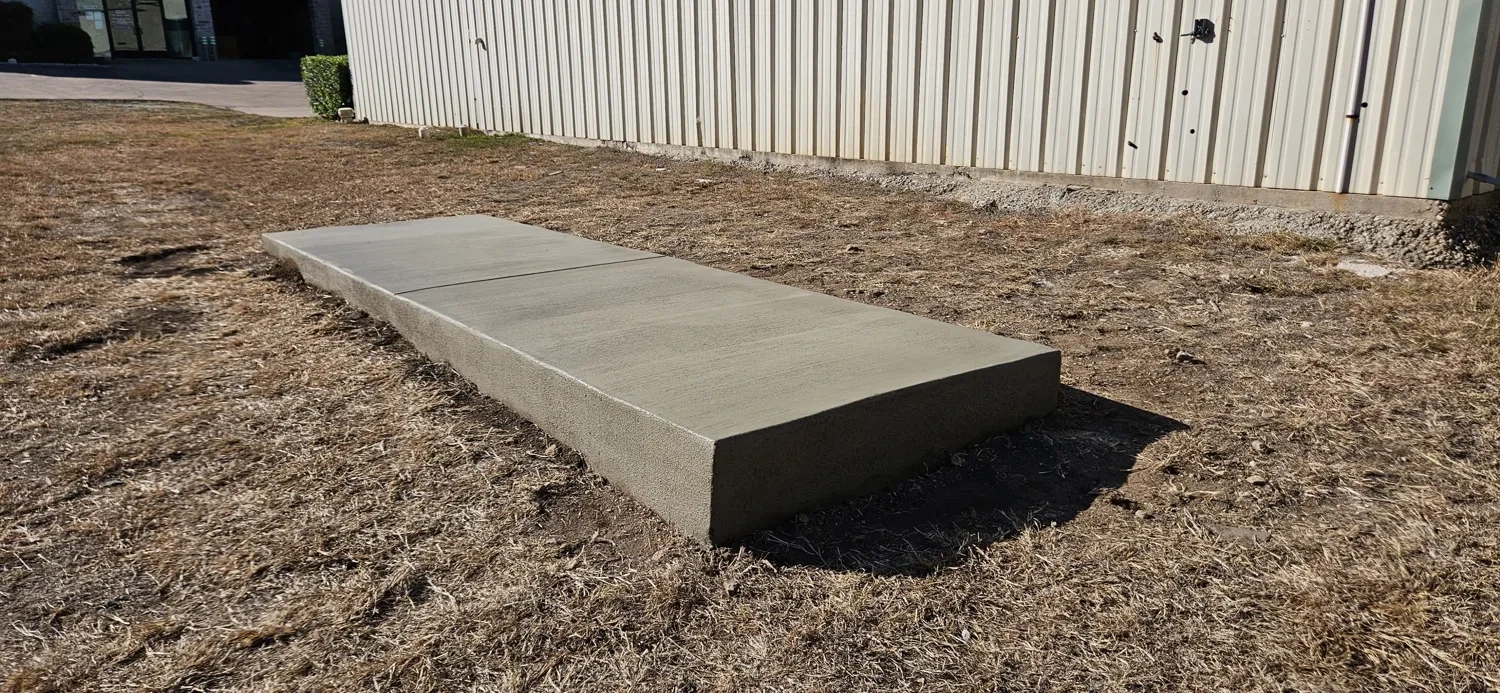
Pads and slabs generally start around $7 to $13 per square foot, with the load driving thickness and steel, and access and grading moving the number. A shed slab and a full RV pad price very differently. We quote after seeing the site, never a phone figure we can't stand behind.
Thicker than a patio, with more steel, because tongue jacks and axles put concentrated loads on small areas. The honest answer depends on the rig, which is why we ask what you park before we spec it. A pad matched to the load costs a little more once and outlasts guessing.
Placement and screening rules vary by subdivision, and some Princeton HOAs restrict where a visible rig can sit even when the pad itself is fine. Check your covenants first; we can help you read the flatwork side of them and design a placement that complies.
Yes, and it should be built to that standard now: correct thickness, reinforcement, anchor placement, and any plumbing or conduit stubbed in before the pour. Pouring a light slab now and hoping to build on it later is the expensive path.
Buggies and narrow equipment through the gate on most lots, a pump line when distance or the route calls for it, and a fence panel removed and reset cleanly when that is simpler. It is routine new-subdivision work for us, priced into the quote, not added later.
Walking within a day or two; structures and vehicles only after the concrete has built real strength, typically a few weeks for heavy loads. We give you dates for your specific pour rather than one blanket answer.
You'll hear back from a real person, usually the same day. No call center, no runaround, no chasing us down.
Booking up fast this season. Or call (469) 259-9076